


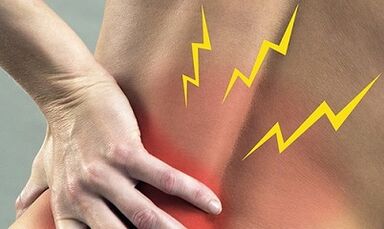
Osteochondrosis is a disease of the spine in which the intervertebral discs are subject to degenerative disorders, and together with them the joints.The interval between them is reduced, because the nerve endings and roots are compressed, which leads to the formation of severe pain.Often pathological changes occur in the lumbar region.
Your doctor will tell you how to treat osteochondrosis of the lumbar spine, because self-medication can only make the condition worse.The difficulty lies in the fact that the symptoms of osteochondrosis can also manifest themselves in other diseases, the treatment of which has fundamental differences.
Basic information about this disease
Not everyone knows what osteochondrosis of the lumbar spine is.To understand the essence of the disease, it is necessary to study the anatomy.
Vertebrae are dense and compact structures in the form of cylinders with arches from which the processes extend.Vertebral bodies are attached to them using arches, and in the middle there is a vertebral foramen.This opening forms the spinal canal.
Not all processes take part in joint formation, but only the upper and lower parts, where small rocking movements are possible.Between the vertebrae there are openings bounded by processes;it is through them that the nerve roots of the spinal nerves appear.
Pathological changes first appear in the nucleus pulposus (a semi-fluid structure with a jelly-like center at the opening of the disc).The nucleus pulposus has maximum elasticity and is the main shock absorber.And then the pathological process develops in the vertebral joints, which leads to the narrowing of the intervertebral foramina.
The sacrum is a large triangular bone located at the base of the spine.It consists of five fused vertebrae and has an anterior and posterior surface.There is no disc in this part, and osteochondrosis does not develop.
Osteochondrosis of the lumbar spine is often diagnosed in people after 30 years.Degenerative processes occur after disruption of water salt metabolism in the disc.As a result, the bone structure thins and becomes fragile.The nucleus pulposus expands its limits and moves towards the spinal canal.As a result, the fluid in the vessels and nerves is compressed, and swelling appears.This triggers the occurrence of painful sensations and dysfunction of the organs to which this area belongs.
Due to the compression, bone cells divide faster and osteophytes (abnormal growths) appear on the vertebrae.Regeneration of the disc is impossible, because it is cartilage, and therefore the function of the organs is more affected.
Lumbar osteochondrosis, the symptoms and treatment of which will be described further, often occurs due to the weakness of the muscle corset, and therefore it is very important to train the abdominal, side and back muscles.
Many people wonder whether osteochondrosis can be treated or not.This disease is easiest to eliminate in the early stages.
Disease stage
Sacral osteochondrosis develops gradually.
There are 4 stages of the disease:
- first degreecharacterized by the manifestation of mild painful sensations that increase after physical activity.Often there is a dull ache that radiates to the back;
- Stage 2.The space between the vertebrae decreases, and they begin to collapse together with nearby tissue.At the same time, the nerve endings are compressed.Intervertebral osteochondrosis causes sharp and radiating pain.The painful sensation forces a person to lean forward.This causes displacement and stretching of the intervertebral disc.
- Stage 3osteochondrosis of the lower spine is indicated by the complete destruction of the vertebrae and the manifestation of intervertebral hernia;
- Stage 4.The spine grows, prone to atrophy, and because of this it is difficult for the patient to move.The spine in the lumbosacral region loses flexibility, becomes less mobile, and often the patient becomes disabled.
It is important to monitor your health and start treatment if the symptoms mentioned above appear.
Cause of disease
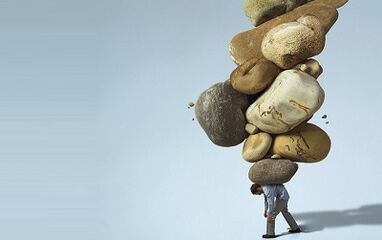
Lumbar osteochondrosis occurs due to constant and uneven loading of the lower back.Sometimes the cause of the disease is autoimmune.In some cases, the disease is preceded by an injury, especially if several vertebrae are affected.
Causes of lumbar osteochondrosis:
- This disease develops due to heavy stress.People who are constantly involved in heavy physical labor suffer more often.
- Lower back pain is caused by excess weight.And this happens because the spinal column in the lumbosacral region is subjected to constant pressure.
- Due to low physical activity, bone tissue nutrition deteriorates, blood flow slows down, and muscles become weak.
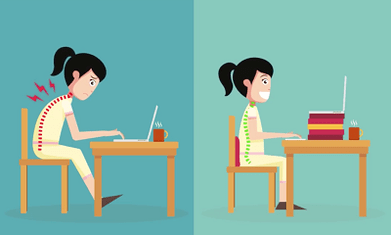
- Osteochondrosis of the lumbar region, the causes of which vary, often develops due to incorrect posture.If a person bends while sitting, the disc becomes deformed and wears out earlier, and this is all due to the uneven load.
- Osteochondrosis often occurs as a result of back injuries.Which can be damaged during training if the level of sports training is low.To avoid problems, it is important to learn how to lift heavy objects correctly.You can hurt your back when you fall.
- Osteochondrosis of the lumbar spine is a natural result of the aging of the body and a decrease in its ability to recover.As a result, the mobility of the discs decreases, they lose flexibility and therefore become deformed.
- This disease often occurs due to rheumatoid arthritis, scoliosis, etc.
In rare cases, osteochondrosis appears as a result of hypothermia, severe depression, poor nutrition, chronic fatigue, and poor environmental conditions.
symptoms
Signs of osteochondrosis in women and men are very similar.The only difference is that in the fair half of people, the disease appears earlier.At the initial stage, the disease does not show itself in any way, the person, without guessing anything, continues to live a full life.However, there are symptoms that can prompt you to make the right decision, which consists of a full diagnosis and seeing a doctor.

Symptoms of osteochondrosis of the lumbar spine:
- Lower back pain.At first, painful sensations appear after exercise, and as the disease progresses, it becomes permanent.
- With lumbar osteochondrosis, mobility in the affected area is reduced.When the patient tries to bend, turn or sit, severe pain appears that spreads down the leg to the leg.
- When the nerve is pinched, the sensitivity of the foot changes (increases or decreases).Sometimes there is burning or numbness in the limbs.
- The skin in the affected area becomes pale, dry, and the temperature drops.
- Increased sweating, especially at night.
- With osteochondrosis of the lumbar spine, the function of the genitourinary organs is disturbed.
These are the main symptoms of lumbar osteochondrosis.
This disease is chronic, but can get worse.
Symptoms of lumbar osteochondrosis in acute and subacute form:
- lumbago – pain occurs after muscle tension.Due to muscle spasm, the patient leans forward;
- during exacerbation, pain appears even after the slightest movement.Painful sensations increase sharply and radiate to the back or legs.The patient's condition is reduced when he lies on his back and bends the affected limb at the knee.After a few weeks, these signs of lumbar osteochondrosis gradually disappear, motor activity is restored, and the muscles relax;
- The subacute phase of the disease is characterized by dull, aching, radiating pain.
If a person sees such manifestations, then it is worth visiting a doctor.
Diagnostic steps

Treatment of osteochondrosis of the lumbosacral spine should begin after a comprehensive diagnosis.
First, a neurologist or vertebrologist conducts a visual examination based on the patient's complaint and palpates the affected body area.If the patient feels pain when palpating a certain point, the range of motion of the legs has decreased, or the back is placed asymmetrically, then the diagnosis is confirmed.In addition, the doctor assesses the patient's posture.
Lumbosacral osteochondrosis, the symptoms of which are described above, can be identified using the following studies:
- X-rays will again confirm the diagnosis.This method cannot assess the condition of the spine.The picture shows only the narrowing of the opening between the vertebrae and the growth of osteophytes.
- A computed tomography scan of the lower back will allow to establish a diagnosis and view the affected area on a computer monitor from different angles or slices.However, this technique is effective in diagnosing bone structure;for the formation of soft tissues, including the vertebral disc, it is recommended to use magnetic resonance imaging.
- Magnetic resonance imaging of the spine shows a complete picture of the state of bone tissue and soft structures in the lumbosacral region.
After conducting the above studies, you can start treating lumbar osteochondrosis.
Treatment methods
Many patients are interested in whether it is possible to completely cure osteochondrosis of the lumbar spine.The answer, unfortunately, will be negative.If you start treatment in the first or second stage of the disease, you can stop its progression.

Therefore, the treatment of osteochondrosis of the lumbar spine is a long and complex process that helps achieve the following goals:
- relieves pain;
- eliminate cramps;
- strengthens the muscles of the abdomen, back, sides, buttocks and legs;
- restore blood flow and metabolism in the affected area;
- eliminate inflammation;
- restore lower back motor function;
- normalizes sensitivity in the legs;
- improve pelvic organ function.
Conservative treatment
The process of treating osteochondrosis begins with the use of various drugs.They are only prescribed by a doctor, because the drugs themselves can have negative effects.Doctors can use several groups of drugs, only in this case a positive result can be expected.
For this purpose, drugs are used:
- Pain relievers, which are used to relieve discomfort;
- Using non-steroidal anti-inflammatory drugs, radicular pain and swelling are eliminated.Drugs with steroid hormones are also prescribed for osteochondrosis.They reduce or completely eliminate inflammation;
- How to treat lumbar osteochondrosis at a later stage is of interest to many patients.Paraspinal blocks are used to relieve pain.To do this, painkillers are injected into the lower back;
- With the help of muscle relaxants you can get rid of muscle spasms;
- To restore the metabolism in the cartilage, start the regeneration process and stop dystrophic changes, the attending physician prescribes chondroprotectors;
- The treatment of lumbar osteochondrosis is carried out using B vitamins. They increase metabolism in cells, eliminate inflammation, remove excess fluid;
- With the help of diuretic drugs, swelling is eliminated;
- Immunomodulator drugs strengthen the immune system;
- To increase blood flow in the affected area, doctors prescribe drugs that reduce blood viscosity.Medicines are injected into a vein using a dropper or taken in tablet form.
Physiotherapy
The use of physiotherapy can bring success in the treatment of osteochondrosis.There are many techniques that can be used;your doctor will help you choose the optimal one if there are no contraindications.Physiotherapy relieves pain, relieves muscle spasms, and activates metabolic and recovery processes.
To solve this problem, the following procedure is established:
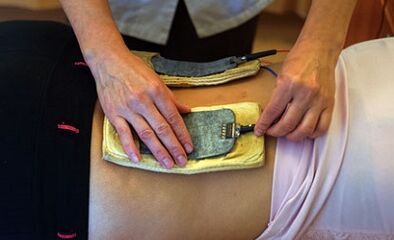
- amplipulseThe affected area is exposed to a sinusoidal modulated current;
- sonophoresis- simultaneous exposure to ultrasound and drugs;
- diadynamic therapy– treatment with low voltage electric current;
- Darsonvalization.The damaged area is exposed to alternating current of low strength, but with high frequency and voltage;
- inductothermy– treatment with a high frequency magnetic field;
- laser therapy– treatment with optical radiation coming from a laser.
The therapeutic effect of this procedure is difficult to overestimate.
If you want to know how to relieve pain, strengthen muscles, relax, then it must be said that this can be done with the help of physical therapy.Reflexology and massage will only increase the effectiveness of the therapy.Massage and gymnastics techniques are performed outside the period of inflammation, otherwise the disease will worsen.It is useful to engage in swimming, as well as doing gymnastics in water, in this case the load on the spine will be minimal.
Surgical treatment
Surgery is the last step, which is done only if the previous methods have not worked and the disease has progressed so that this is the only way to help the patient to be active again.Intervention is performed in case of significant movement disorders and the presence of intervertebral hernia.Therefore, it is better not to know how to cure lumbar osteochondrosis through surgery, because it is considered the most radical.
The surgeon removes the hernia between the discs and strengthens the vertebrae that have become misaligned.Doctors can also perform spine fusion operations, the essence of which is that the spine is completely immobilized using a special metal structure.This is followed by long-term recovery.
Special instructions
If lumbosacral osteochondrosis is not treated, the sciatic nerve may become inflamed, which can cause severe pain.To reduce discomfort, a person leans forward, but because of this, the condition of the spine in the damaged area only worsens.
Osteochondrosis of the lumbar region, the symptoms of which can be different, threatens the instability of the vertebrae.The disc cannot hold the vertebra, and the lumbar region is displaced from the sacrum due to compression.In this case, the function of the genitourinary organs is affected.
To avoid complications, you must adhere to the following rules:
- avoid intense physical activity;
- strengthens the muscular corset;
- maintain proper posture;
- exercise every day;
- creating nutrition, maintaining a balance of proteins, fats and carbohydrates;
- adhere to an optimal rest regime;
- treat back disease at an early stage.
You can also not self-medicate - then the disease will disappear as soon as possible.It will be useful to wear a corset, which will relieve the load on the lumbar spine.